Boyd's photo diary. |
|
|
|
|
|
|
Wed 31 Jul 2019
|
Mid-morning cycled to Pleasington Crematorium to the Book of
Remembrance room to see Mum’s entry as today is 9 years since
she died. Cycled home via Brindle and Marsh Lane. |
Daughter Jill in 1977 |

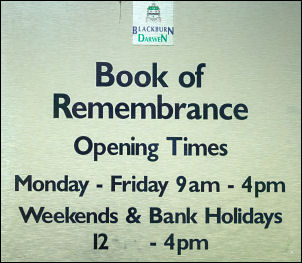
Books of Remembrance |
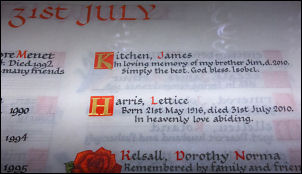
Mum's entry |

Pleasington Crematorium |

Wet evening walk to Withnell Fold |
Late afternoon walked in
the rain along canal to Withnell Fold and Mum’s memorial bench
to have butties for my tea. Walked back along the canal then
Copthurst. |

Mum's bench at Withnell Fold |
|
|
|
Mon 29 Jul 2019
|
Evening walk through part of Cuerden Valley by Lower Kem Mill.
The bench by the lake has been removed as it is was rotten.
There is no replacement yet. |
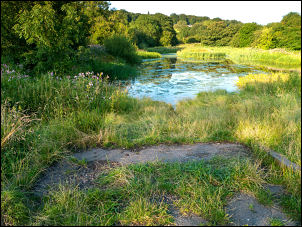
Where the bench used to be |
|
Sat 27 Jul 2019
|
A short bus ride and I was at the 5th Chorley Flower Show,
Astley Park, Chorley. The entrance charge was up £2 from last
year to £12 but I almost pay that to go to the cinema. There was
slight rain for most of my visit but with lots of huge tents and
events in them the rain wasn’t be a problem. I saw a few old
friends and was able to have a good natter. |

Entrance queue |
|
A huge thanks to Chorley Council the organisers and
especially those dedicated volunteers who manned the stalls and
displays. It’s on again tomorrow. |
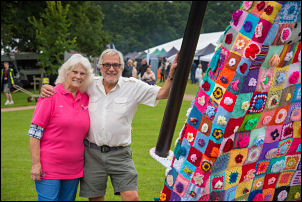
Iris and Jim |

Chorley Flower Show |

Iris and Jim Smith |
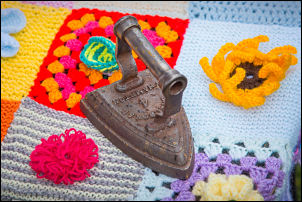
Flatiron |
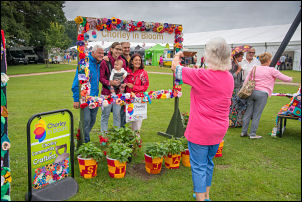
Iris takes a photo |
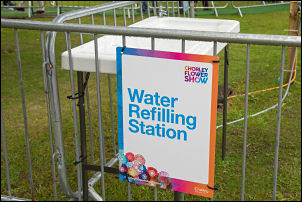
Water re-filling |

Earl of Beaconsfield looks on |

|

Across the pond to Astley Hall |

Across the pond from Astley Hall |
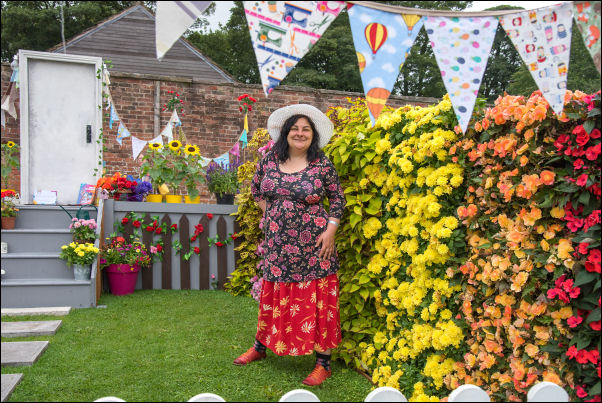
Thanks Estelle |

|

|
|
|
|
Fri 26 Jul 2019
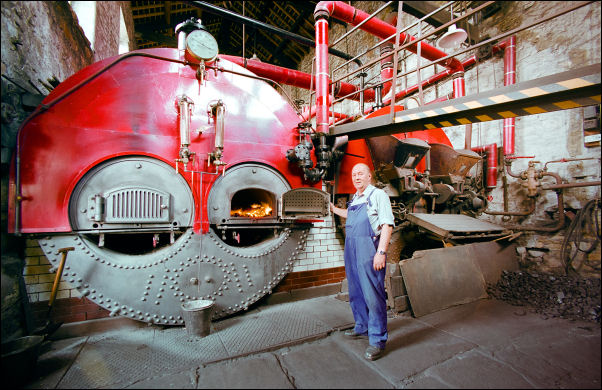
Lancashire Boiler, Queen Street Mill Burnley |
The industrial revolution and the concept of the large mill
running many machines started in the north. Richard Arkwright
built his cotton mill at Birkacre, Chorley in 1777. It was one
of the world’s first factories in the modern sense. Sadly the
machinery was smashed and the mill set on fire by rioters in
1779. They were hostile to the modern machine driven industry
and this attempt to halt development continued at other mills.
Richard Arkwright didn’t rebuild his mill but moved his centre
of operations to Cromford in Derbyshire. Industrial progress was
only slowed for a while and soon gained momentum as mills
appeared all over the country. The first large mills in
Whittle-le-Woods were Kem Mill (cotton) and Low Mill Print
Works, Town Ln. and just over the boundary in Clayton-le-Woods
was Lower Kem Mill Print Works. Lower Kem Mill started in the
late 1790s and was powered by a waterwheel. The Ordnance Survey
map of 1848 shows the waterwheel location. By the mid-1800s
steam engines were the main power source and these used coal
fired boilers to provide steam under pressure. Whittle-le-Woods
was able to import coal for its mills from 1803 when the canal
was opened from Liverpool as far as Walton Summit. In 1816 the
canal was linked to the Leeds length at Whittle Springs and the
Johnson’s Hillock locks. A major breakthrough in boiler
efficiency occurred in 1844 when William Fairbairn invented the
Lancashire Boiler. It became the standard boiler in Greater
Manchester and Lancashire cotton mills for many decades and
several working boilers still exist today. Excavations at Lower
Kem Mill in 2001 revealed the mounting bed and flues of their
Lancashire boiler. The boiler has a characteristic shape and the
photo shows the 1894 boiler at Queen Street Mill near Burnley. |

Kem Mill, Whittle-le-Woods |

Low Mill Print Works off Town Lane, Whittle-le-Woods |

Lower Kem Mill & Kem Mill 1848 |

July 2001 excavations
Lower Kem Mill |

View today |

July 2001 excavations |

View today |
|
|
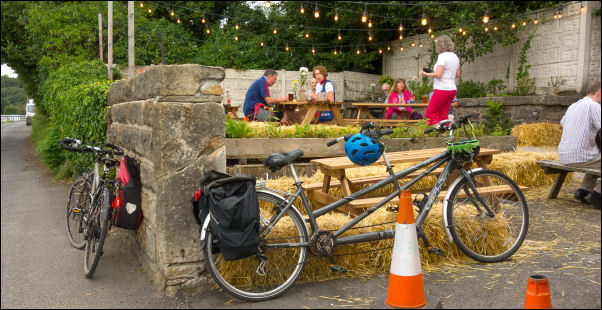
Enjoyed an evening bike ride via Wheelton, Hoghton and Brindle.
On the way saw a tandem bike at the Top Lock Pub on Kenyon Lane,
Wheelton. |
|
|
|
|
|
Mon 22 Jul 2019
|
Spent some time digitising a few old old slides and negatives. |

Daughter Jill in 1977 |

Jean Millington May 1973 |

Automatic colourising |
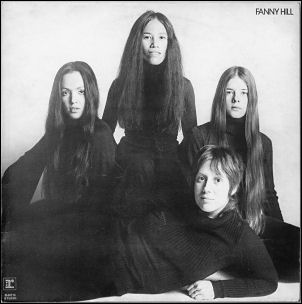
Jean, June, Alice & Nickey.
The first of their albums I
bought |

June Millington May 1973 |
|
|
|
Sun 21 Jul 2019

Tank used for target practive during WW2 at Rivington - Belmont
Road. Photo from Henry Lisowski. |

Same view today |

A walk up lead Mines Clough Anglezarke to the old lead mine
workings |

Artist's impression of how they may have looked |
Morning drove to Belmont then Alance Bridge to park car and go
for walk up Lead Mines Clough to look at opening that has
appeared by first waterfall. Also stopped by crashed bomber
memorial.
Information about the crashed Wellington Bomber is
at:
http://www.anglezarke.net/history/bomber-zulu/ |
Extract from the Anglezarke website:
Anglezarke Moor was the
location of a tragic air crash on the 16th November, 1943.
Wellington Bomber Zulu 8799 lost control over Hurst Hill on the
moors, and all the crew were pronounced dead at the scene.
The plane had taken off from 28 Operational Training Unit at
Wymeswold in Leicestershire on a night time training exercise,
known as a Bullseye mission. Its pilot was Flight Sergeant
Joseph B. Timperon, who came from far away Alice Springs in
Australia and was attached from the Royal Australian Air Force
approximately 8 months prior. Timperon was only 24 years old
when he died, and precious little is known of the five young
British crew members who died with him.
Nothing was heard
from Flight No. Z8799 after take-off and at 0240 hours, the
aircraft was officially recorded overdue. By this time, the
crash had already happened.
A revealing witness account comes
from local resident George Telfer, who was living at Siddow Fold
at the time of the incident:
“The steady throb of the engines
became irregular. A screaming sound followed as the machine tore
itself apart in a rapid descent. There was a final crash, and
then silence”.
Reports also came from Chorley’s Royal
Observer Corps. The most revealing account was written by a
Police War Reserve Constable, C.H. Swift from Chorley, in 1955,
to a relative of one of the crew members.
PC Swift witnessed
the final moments of the stricken aircraft and was one of the
first at the scene of the crash:
“That night was not a
very dark one, neither was it stormy, yet for several nights
previous, it had been intensely cold, with frost up to 15 below
zero. I was on night-duty; it was a starry night, with white
culimnous cloud, hiding a 3/4 full moon. I had been given 1.30am
as my supper period, which we had in the Chorley Police Station.
It was a 1/2 hour break and I remember the heavy drone of an
aircraft at what seemed overhead, as I entered the station. Half
an hour later, I left again in company of a Police Patrol
Driver, to resume a given area of patrol.
Strange it seemed,
the noise of the aircraft was still hanging around. My friend
remarked how cold it must be up there, we could not see anything
of course. For ten minutes or so, I had his company, he was
finishing his night’s duty and I was alone, making my way to a
Police point expecting a visit there from the Sergeant or
Inspector. It so-happened that I was passing a branch of Leyland
Motor Works, when the noise of an aircraft, increased
tremendously. I looked up, there descending, almost over my head
was an aircraft. It bore a yellow and green light on each wing
tip, and I could see two engine cowlings on each at the front.
My personal feelings at that moment was enemy aircraft – bombing
the Leyland Works – but the plane was then only 2 or 3 hundred
feet above with both its engines running at-full throttle, when
over the houses in front of me, it disappeared. Two or three
seconds later a crash came, it shook the ground where I stood,
though the crashed plane was found 5 miles away, from that
point. The time I shall never forget was 28 minutes past 2 in
the morning.
I ran to the telephone kiosk 30 yards ahead
of me, when I heard running feet approaching, it was the Police
inspector and the Sergeant. They had heard all, but did not see
anything. I confirmed a plane crash, and rang for a car. By
2.30AM, along with the Inspector and Sergeant, we were on the
way to the countryside. The inspector asked me for an area
likely to contain the crash, so we arrived at the edge of
Anglezarke Moor, and proceeded to search the woods, but had to
give up. We returned to the Police Station for reinforcements
and left again at 7am with a party of 6. I was given the lead so
I made immediately for the Moors again and with coming light,
continued the search. I discovered a rabbit dead, but not
frozen, so we alerted all, and ahead of me was seen something
unusual. It was a turret (rear gunner), and a petrol tank.
Twenty yards to my left was a Wellington Bomber lying on its
back.
We recovered five bodies, a sixth was later found
beneath the front of the bomber. We had to search for
identification purposes, discovering the first to be an
Australian, another if I remember rightly came from Sheffield,
the rest from the South of England. They had in their possession
identity cards, this proved to us that the bomber had not been
over enemy territory. I remember to one of the crew had a long
envelope, on the front was printed ‘your photographs’ one 1/2
dozen – inside was on 1/2 dozen photographs of the airmen and a
pretty young lady. That must have been one of the last things he
did, collect his photographs, for none had been taken out.
You can have my opinion for what it is worth. The crash was
not due to engine failure, for at no time did I hear any unusual
noise from the engines. I would say the icy conditions forced
the plane to crash. I had to make a report and plan of the
crash, but that was the last I heard of the incident, I was not
called to any Air force enquiry. One of the Bomber’s engines was
missing, but recovered 12 months after in a wood, some 10 miles
away in Darwen area, Lancashire”.
|
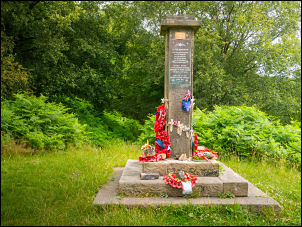
Crashed Wellington Bomber memorial 1943 erected 1955 |

|

Wellington Bomber similar to crashed bomber |
|
|
|
Sat 20 Jul 2019
This morning visited the Horwich Heritage Centre (on 125 bus)
for the opening of the exhibition ‘On Our Doorstep: The West
Pennine Moors (pre-history/industry/military/recreation)’. It is
on until 5th Sep 2019. Horwich Heritage Centre, Beaumont Rd.,
Horwich. BL6 7BG. Open Monday to Friday 2.00pm - 4.00pm,
Saturday 10.00am -12.30pm.
|
 |
|
Big thanks to Derek
Cartwright, Stuart Whittle, Dave Lane and many more for making
it all possible. It was great to see the Noon Hill Bronze Age
Cremation Urn dating from around 1,100BC. It was the first time
I’d seen the Bronze Age Axhead from Charter Moss, Turton dating
from 900Bc and a modern copy. Also a Bronze Age Spearhead
circa1000BC from Belmont Reservoir also with a modern copy. I
knew about the Horwich Locomotive Works but not that it was
involved in the production of fuses and shells in WW1 or the
building of Matilda Tanks during WW2. |

Heritage Centre |

Noon Hill Bronze Age Cremation Urn dating from around 1,100BC |

Bronze Age Spearhead circa 1000BC from Belmont Reservoir |

Bronze Age Axhead from Charter Moss, Turton dating from 900Bc
and a modern copy |
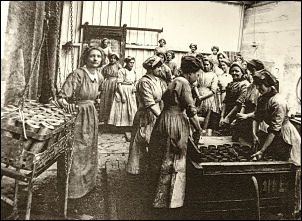
Munitions work WW1 |
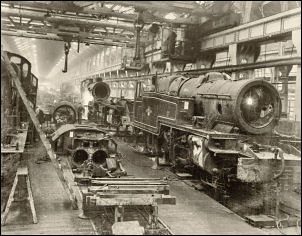
Horwich Loco Works |

Matilda Tank built at Horwich Locomotive Works |
|
|
|
Fri 19 Jul 2019
|
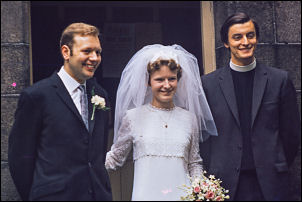
Congratulations to my lovely cousin Pat and husband Irvine.
Today Fri 19th July 2019 is thir golden wedding anniversary. I
remember your wedding 50 years ago. I took photos on my Zenit
camera with Ferrania colour slide film. It was an extra special
weekend as on Sat 19th July 1969 and on Sun 20th July I listened
to the moon landing and stayed up through the night to watching
TV and the first moon-walk on Mon 21 July 1969. |

Pat and Irvine's wedding |

Pat and Irvine's wedding |

Pat and Irvine's wedding |
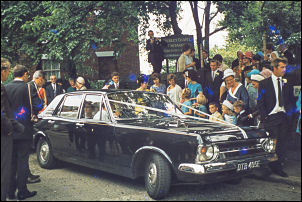
Pat and Irvine's wedding |
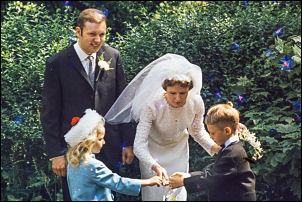
Pat and Irvine's wedding |
Pat and Irvine's wedding |
|
|
|
Tue 16 Jul 2019
|
I was out to try and take a snap of the partial eclipse on the
moon from Whittle-le-Woods, Chorley. The moon was very low so
trees and houses in the way. I could only see it as the shadow
of the earth began to move away at 22:45. |

Chapel in Bishop's House |
|
Mon 15 Jul 2019
|
Caught first ferry 08:50 back to Mull then cycled to Torr Mor
quarry using the new cycle track by the main road. Then returned
to Fionnphort and south past camp site to end of road and
wheeled bike down rough track to Sound of Erraid. Wheeled my
bike across sand to Erraid Island then back to look at camp site
area. Then back to Iona for 13:00 lunch (Robbie had Sunday and
Monday off so didn’t see him again). |
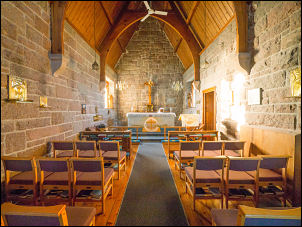
Chapel in Bishop's House |
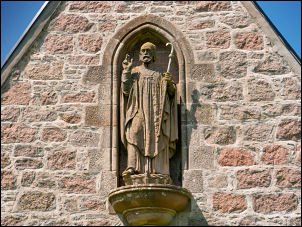
St Columba |

Monday morning Bishop's House |

Low tide and my bike by Isle of Erraid |

Afternoon walk up Dun I and managed to see Skerryvore (Checked
distance and its 43.5km - 27miles) |
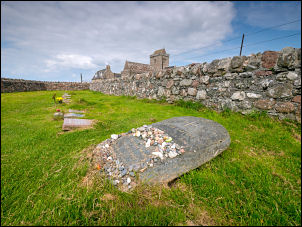
Grave of John Smith (1938–1994) past Leader of the Labour
Party.
The quotation on the gravestone "An honest man is
the noblest work of God" is from: An Essay on Man by the English
poet Alexander Pope. |
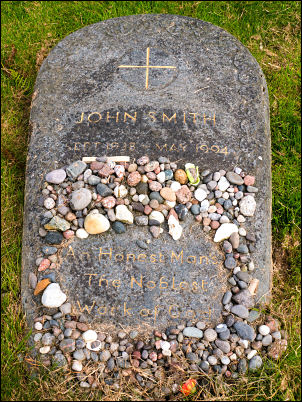
Grave of John Smith (1938–1994)
past Leader of the Labour Party |
 |
|
|
|
Sun 14 Jul 2019
|
Caught first ferry 08:50 back to Mull with bike and cycled to
nearby Kintra for a look around. Back to Iona for lunch at 13:00
then walk through Abbey grounds and up Dun I to see the
cylindrical trig post. |

Sunny morning at my camp on Iona |
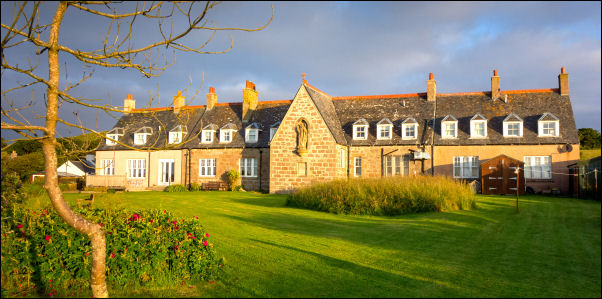
Bishop's House Iona |

Old Shieling at Kintra, Mull |
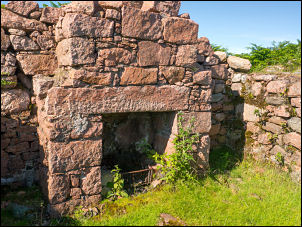
Fireplace |
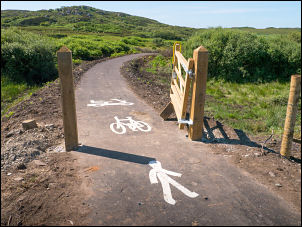
New cycle track near Fionnphort |

Seat by the cycletrack |
Sunny walk up Dun I on Iona |

Concrete trig post |

Trig post on Dun I, Iona |
|
|
|
Sat 13 Jul 2019
|
Set off from Craignure, Mull at 7am cycling towards Fionnphort
across Mull. Photographed refurbished monument to Dugald
MacPhail (1818-1887) at Strathcoil. Erected 1929 and built of
stone from the ruins of the poet's old home. On the way just
outside Bunnessan saw cycling skeleton which was an entry in the
scarecrow festival. |
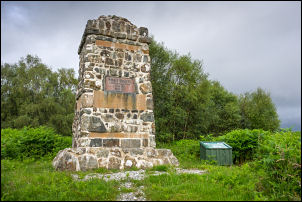
Refurbished monument to Dugald MacPhail
(1818-1887) at Strathcoil |

Erected 1929 and built of stone from the ruins of the poet's old
home. |

Milepost |
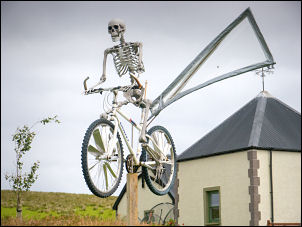
On the Scarecrow trail |
I arrived around 11:40am after just over 4hrs moving time.
£3.50 return fare on ferry to Iona. Cycled to Bishops House and
saw Robbie as I set up tent. |

Iona Abbey before rebuilding |
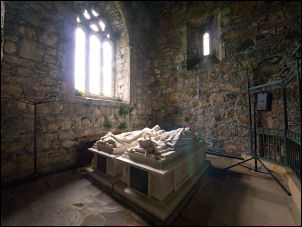
Iona Abbey |
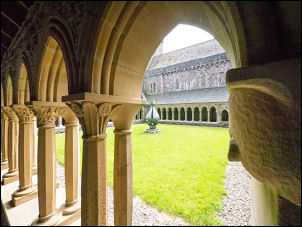
Iona Abbey |
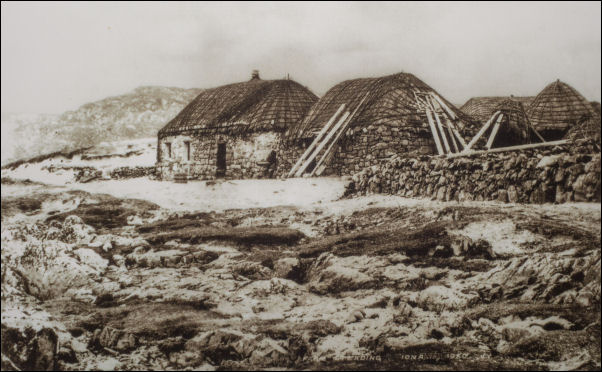
Old photo of Iona in the Heritage Centre |

Old group photo by the Iona pier |
|
|
|
Fri 12 Jul 2019
|
Morning drove to Stonyhurst
College near Whalley to join a conducted tour with Brindle
Historical Society. It was interesting seeing the desk used by
the writer Arthur Conan Doyle (1859-1930) author the Sherlock
Holmes novels. He was at Stonyhurst from 1868 at the age of 9.
At some point he carved his name A. Doyle into the desk. |
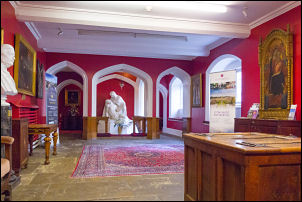
Stonyhurst College |

Stonyhurst desk |
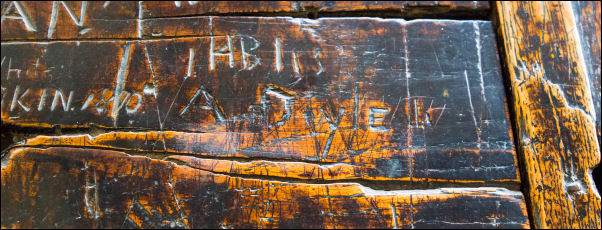
A. Doyle carving. Arthur Conan Doyle (1859-1930) |
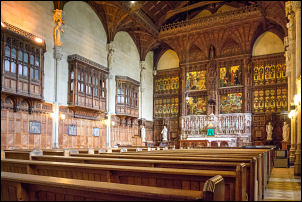
One of the chapels |

First editions of Through the Looking Glass by Lewis Carroll |
|
|
|
Wed 10 Jul 2019
Drove to Preston and car park on Manchester for just before 5am.
Walked to Railway Station to catch the 05:41am train to Glasgow.
Attended the Community Archives and Heritage Group 13th Annual
Conference at the Glasgow Royal Concert Hall. I’ve attended all
the previous conferences which were in London but didn’t go to
the first outside London last year which was in Birmingham. |
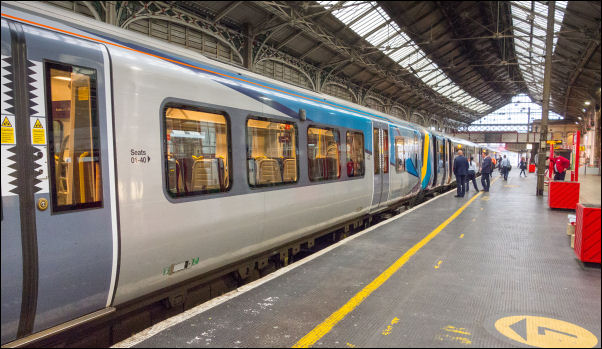
Leaving Preston |
The theme this year was
Moving Memories – Migration in Community Archives.
I was
expecting something rather grand for the lecture theatre but it
was just a room with chairs. The London venue was a proper
lecture theatre with places to put notebook etc in front.
However, Glasgow was much easier and cheaper to get to. The
presentations were excellent and it’s always interesting seeing
how enthusiastic amateurs get the job done. |

Glasgow Central Railway Station |
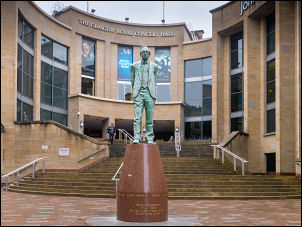
Glasgow Royal Concert Hall |
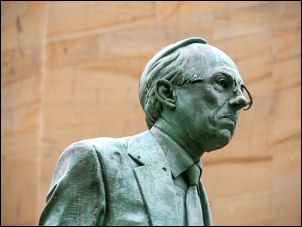
Donald Dewar (1937–2000) Scotland's first ever First Minister |

The Glasgow Royal Concert Hall |
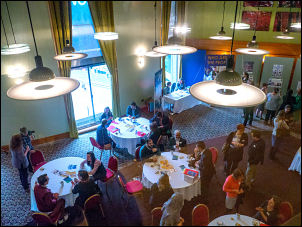
The Glasgow Royal Concert Hall |

Steps in the Concert Hall
|

Leaving the Concert Hall |
|
|
|
Tue 09 Jul 2019
|
Drove via outskirts of Todmorden then steeply up to Stiperden or
Mount’s Cross. It is one of a series along the route of Long
Causeway between Burnley and Hebden Bridge. It is mentioned in
Henry Taylor’s Ancient Crosses of Blackburn Hundred published
1900. |
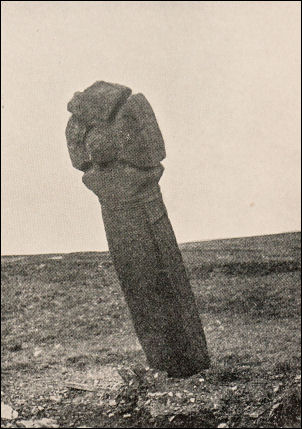
Stiperden Cross in 1900 |

The Cross today |
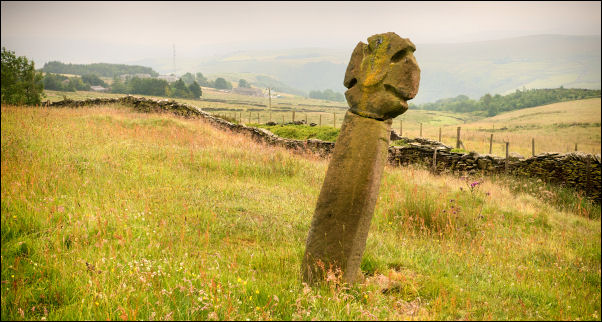
Stiperden Cross |
|
|
|
Sat 06 Jul 2019

An interesting sky as I set off to drive home from Scotland |
|
|
|
Fri 05 Jul 2019

An interesting view of Schiehallion, Scotland. |
|
|
|
Tue 02 Jul 2019
|
Bought a pair of Zamberlan Vioz boots size 44. They replace the
last pair of the same type as I bought there in Sep 2014 for
£164.95. This pair cost £209.95. |

Zamberlan new |

Zamberlan old |

Zamberlan new and old |
|
|
|
|
|
|
|
|
|
